


Why Leather Conditioning Is Essential for Designer Bags
Table of Contents
- Why Leather Conditioning Matters for Designer Bags
- How to Condition a Leather Handbag: A Step-by-Step Process
- How Often to Condition Leather Bags
- Best Leather Conditioner for Bags: Selection and Safety
- Leather Conditioner for Different Leather Types
- Conditioning as Part of Your Long-Term Care Strategy
- Frequently Asked Questions
Last Updated: October 4, 2026
Why Leather Conditioning Matters for Designer Bags
Understanding why leather conditioning is essential for designer bags helps owners preserve the natural material that defines luxury handbags. Leather is a living material that loses moisture over time, becoming dry, stiff, and prone to cracking. A well-conditioned bag maintains its suppleness, luster, and structural integrity for decades.
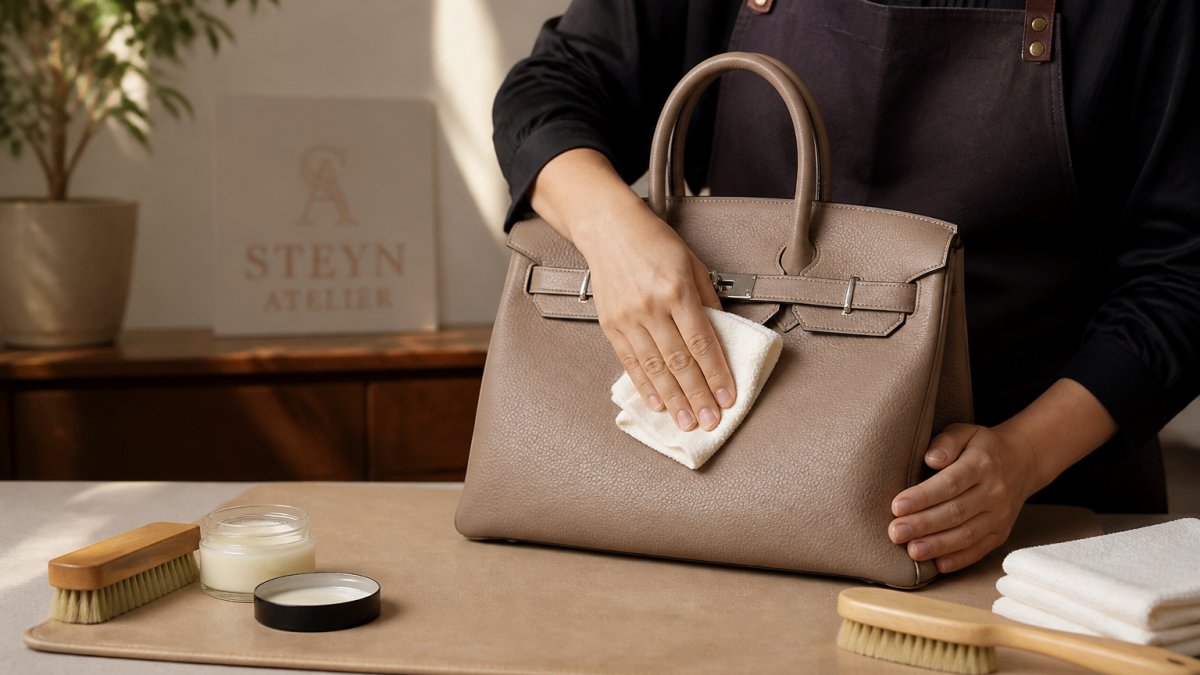
Luxury bags represent significant investments in craftsmanship and heritage. The leather used in designer pieces, whether full-grain, calf, or specialty finishes, requires intentional care to perform as intended. Without conditioning, even the finest leather deteriorates faster than it should.
How Leather Dries Out and Loses Natural Oils
Leather is composed of collagen fibers held together by natural fats and oils. These oils keep the material flexible and water-resistant.
The drying process happens gradually. A bag exposed to dry indoor heat loses moisture faster than one stored in a climate-controlled environment. Leather in humid climates may dry differently than leather in arid regions.
When leather loses its natural oils, the fibers become brittle. The material loses its ability to move and flex. Eventually, small cracks appear, first as surface lines, then as deeper damage that's difficult to repair.
The Cost of Neglecting Conditioning
Unconditioned leather develops visible problems within months of regular use. The surface loses its luster and appears dull. Colors fade unevenly. The leather becomes stiff, making the bag uncomfortable to carry and harder to open and close.
Cracking is the most serious consequence. Once cracks form, they spread. A small surface crack can become a structural weakness that compromises the bag's shape and function.
A designer bag that could last 15-20 years with proper care may deteriorate to unwearable condition in 5-7 years without conditioning. The difference between a well-maintained bag and a neglected one is dramatic.
How to Condition a Leather Handbag: A Step-by-Step Process
Conditioning a leather bag requires care and attention to detail. The process takes 30-45 minutes and involves preparation, application, and drying time.
What You'll Need Before Starting
Gather these items before beginning:
- Soft, lint-free cloths (microfiber or cotton)
- Leather cleaner (appropriate for the bag's finish)
- Leather conditioner (tested on a hidden area first)
- Distilled water in a spray bottle
- A well-ventilated space
- Optional: soft-bristled brush for textured leather
Never use products designed for furniture or car leather on luxury handbags. Designer bags require gentler formulations. The wrong product can leave residue, darken the leather unevenly, or damage specialty finishes.
Cleaning Your Bag Before Conditioning
Conditioning works best on clean leather. Dirt and dust prevent the conditioner from absorbing evenly and can trap particles in the material.
Start by wiping the exterior with a dry cloth to remove surface dust. Use a slightly damp cloth, not wet, to gently clean the bag. For textured or hammered leather, a soft brush helps remove debris from crevices. Pay special attention to corners and seams where dirt accumulates.
Let the bag air dry completely before applying conditioner. This usually takes 1-2 hours in a well-ventilated space. Never use heat to speed drying, as this can damage the leather.
The Conditioning Application Process
Apply conditioner in thin, even layers. Use a small amount, about the size of a dime for an average handbag.
Work the conditioner into the leather using circular motions with a soft cloth. Cover the entire exterior surface, including the bottom and back.
Let the conditioner absorb for 10-15 minutes. The leather will gradually become darker and more supple as the product soaks in.
Allow the bag to rest for 24 hours before using it. This gives the conditioner time to fully penetrate and cure.
Common Mistakes to Avoid
Applying too much conditioner is the most common error. Excess product sits on the surface, attracts dust, and can cause permanent discoloration.
Using the wrong type of conditioner damages specialty finishes. Patent leather, hammered finishes, and textured surfaces require specific products.
Conditioning too frequently causes buildup. Conditioner that isn't fully absorbed accumulates on the surface, making the leather feel sticky and look dirty. This buildup can also clog the leather's pores.
Skipping the patch test on hidden areas is risky. Even products labeled safe for leather can react unexpectedly with certain finishes or dyes.
How Often to Condition Leather Bags
The ideal conditioning schedule depends on how much the bag is used and where it lives. There's no universal rule that works for all bags.
A bag used daily in a dry climate needs conditioning every 3-4 months. A bag used occasionally in a humid environment might need it twice a year. The key is watching for signs that conditioning is needed rather than following a fixed calendar.
Climate and Usage Factors
Dry climates accelerate moisture loss from leather. If the bag lives in a heated home during winter or in an arid region, it needs more frequent conditioning.
Humid climates slow drying but create different challenges. Moisture in the air can promote mold growth on leather if the bag isn't stored properly.
Bags used daily experience more flexing and stress. The leather loses oils faster due to friction and exposure.
Bags stored in closets or bags with limited sun exposure need less frequent conditioning than bags carried outdoors. Sunlight accelerates the breakdown of natural oils and causes uneven fading.
Signs Your Bag Needs Conditioning
The leather feels stiff or less flexible than it used to. This is the earliest warning sign that oils are depleting.
The surface looks dull or matte instead of lustrous. Well-conditioned leather has a subtle sheen that reflects light evenly.
The color appears faded or uneven. Neglected leather loses its rich tone and may show lighter or darker patches.
Fine lines or hairline cracks appear, especially in areas that flex during use. This indicates the leather is becoming brittle and needs immediate attention.
The bag is difficult to open and close, or the leather creases more sharply than before.
Best Leather Conditioner for Bags: Selection and Safety
Choosing the right conditioner requires understanding what the leather needs and what the product delivers. Not all leather conditioners are created equal.
Products designed for luxury leather are gentler and more carefully formulated than mass-market alternatives. They focus on nourishing the leather without leaving residue or altering the finish. Look for conditioners specifically labeled for handbags or designer leather goods.
The best conditioners contain natural oils and waxes that mimic the leather's original composition. They absorb into the material rather than sitting on the surface. Avoid products with silicone or heavy waxes that create a plastic-like coating.
Testing Products on a Discreet Area
Always patch-test a new conditioner on a hidden area of the bag before applying it to visible surfaces. The interior of a pocket, the back of the bag, or an underside seam works well.
Apply a small amount and let it dry completely. Check the area for discoloration, residue, or any change in texture. Wait 24-48 hours to ensure no delayed reactions occur.
Some leather finishes react unexpectedly to certain products. A conditioner that works beautifully on full-grain leather might leave a dull film on patent leather or cause patina changes on vintage leather.
Identifying Over-Conditioning and Product Damage
Over-conditioned leather feels sticky or oily to the touch. The surface may appear wet or have a greasy shine.
Residue buildup occurs when conditioner is applied too frequently without proper removal.
Some products cause permanent darkening or discoloration. If the leather becomes significantly darker after conditioning and doesn't return to its original tone after drying, the product may have altered the dye or finish.
Damage from incompatible products can include cracking of specialty finishes, loss of patina on vintage leather, or permanent staining. These issues often can't be reversed. Choosing the right product from the start prevents costly mistakes.
Leather Conditioner for Different Leather Types
Not all leather is the same. Different finishes and treatments require different conditioning approaches.
Full-Grain and Natural Leather
Full-grain leather is the highest quality and most responsive to conditioning. It absorbs products readily and shows visible improvement quickly. The leather becomes noticeably softer and more supple after conditioning.
Natural leather develops a patina over time, a darkening and mellowing of the color that many collectors appreciate. When conditioning natural leather, choose products that enhance rather than mask this patina. Conditioning preserves the leather's character while protecting it.
Full-grain leather is durable but still needs regular conditioning to maintain flexibility. The leather's natural surface markings, scars, veins, and variations, are part of its appeal. Conditioning highlights these features rather than hiding them.
Specialty Finishes: Hammered, Textured, and Patent Leather
Hammered and textured leather require gentler conditioning. The surface has intentional variations that can be damaged by aggressive rubbing. Use a soft cloth and work the conditioner in gently without pressing hard into the texture.
Patent leather has a high-gloss coating that requires specialized care. Standard leather conditioner can dull this finish or leave residue. Patent leather conditioner is designed to maintain the glossy appearance without damaging the coating.
Textured finishes trap dust and debris. Clean thoroughly before conditioning to remove particles from crevices. A soft-bristled brush helps without damaging the texture.
Brand Care Instructions and Warranty Considerations
Many designer brands provide specific care instructions for their leather goods. These guidelines reflect the tannery methods and finishes used for that brand's leather.
Some brands recommend specific products or discourage certain treatments. Using a product the brand advises against may void warranty coverage if leather damage occurs.
Warranty coverage typically doesn't extend to damage caused by improper care. Using incompatible products, over-conditioning, or neglecting cleaning can be considered misuse.
Steyn Atelier's curated collection includes pieces from heritage brands with distinct leather characteristics. When acquiring a pre-owned designer bag, understanding its specific leather type and any brand care recommendations ensures proper long-term maintenance.
Conditioning as Part of Your Long-Term Care Strategy
Recognizing why leather conditioning is essential for designer bags means understanding it as one element of comprehensive bag care. It works best alongside proper storage, regular cleaning, and protection from extreme conditions.
Store bags in cool, dry spaces away from direct sunlight.
Clean the bag regularly, monthly for daily-use pieces, to remove dirt and prevent buildup.
Protect the bag from water and extreme heat. While leather is naturally water-resistant, prolonged exposure to moisture can cause damage.
Rotate bags if possible. Using different bags on different days distributes wear and allows each piece time to rest and recover.
Professional cleaning and conditioning services are available for valuable pieces or specialty finishes.
When acquiring a pre-owned luxury handbag, conditioning is often the first care step.
Leather conditioning preserves the luxury and functionality that define designer handbags.
Frequently Asked Questions
Is leather conditioner really necessary for designer bags?
Yes. Leather is a natural material that loses moisture and oils over time, especially with regular use and exposure to air. Without conditioning, leather becomes brittle, stiff, and prone to cracking. Conditioning restores the moisture balance, preserves softness and suppleness, and extends your bag's lifespan. Even high-end designer bags benefit from regular conditioning to maintain their appearance and structural integrity.
How often should you condition a leather handbag?
Most leather bags benefit from conditioning every 6 to 12 months under normal conditions. If you use your bag daily, live in a dry climate, or expose it to harsh conditions, condition it more frequently, every 3 to 6 months. Watch for signs of dryness such as a dull appearance, stiffness, or visible cracks. Always check your designer's care instructions first, as some brands recommend specific conditioning schedules or products.
What happens if you over-condition a leather bag?
Over-conditioning can saturate the leather with excess oils, making it feel greasy, sticky, or darkened. The leather may lose its shape, develop water spots, or become prone to mold in humid conditions. Excess product can also attract dirt and dust. Start with a small amount of conditioner, test on a discreet area first, and apply sparingly. If over-conditioning occurs, wipe away excess product immediately and let the bag air dry in a well-ventilated space.
Can you condition different leather types the same way?
No. Full-grain and natural leather can tolerate general-purpose leather conditioners. Specialty finishes like hammered, textured, or patent leather require more caution, some finishes are delicate and may be damaged by certain products. Always check your bag's care label or contact the designer for recommended products and methods. When in doubt, test any conditioner on a hidden area first. For luxury pieces, consulting the brand's guidelines ensures you preserve both appearance and value.