


Luxury Resale Condition Grading Explained
Table of Contents
- What Is Luxury Resale Condition Grading?
- Why Condition Standards Vary Across Resale Platforms
- The Five Condition Grades: Pristine, Excellent, Very Good, Good, and Fair
- Common Signs of Wear on Luxury Handbags
- How to Inspect Pre-Owned Designer Bags
- How Condition Impacts Resale Value
- The Role of Original Packaging and Authenticity Documentation
- Conclusion
Last Updated: August 12, 2026
What Is Luxury Resale Condition Grading?
Luxury resale condition grading is the standardized assessment system used to evaluate the physical state of pre-owned designer handbags and accessories before they enter the secondary market. This classification determines asking price, buyer confidence, and likelihood of a successful sale.

The challenge lies in fragmentation across resale platforms. Each marketplace uses its own proprietary grading methodology, creating confusion for buyers and sellers. A bag labeled "excellent" at one venue might be called "very good" at another. Understanding the nuances of condition grading is essential for anyone buying or selling pre-owned designer pieces.
The core grading spectrum typically ranges from pristine (unworn, original packaging intact) through fair (heavy wear, structural integrity maintained). Between these extremes sit the most common categories: excellent, very good, and good. Each tier reflects specific wear patterns, material integrity, and usability factors that directly influence valuation and buyer satisfaction.
Why Condition Standards Vary Across Resale Platforms
The absence of a universal luxury resale condition grading standard creates a fragmented marketplace where terminology lacks consistency. Unlike automotive resale, luxury fashion has no single governing body establishing condition definitions.
This fragmentation stems from different platforms serving different buyer demographics and using proprietary systems to differentiate competitively. The subjective nature of luxury goods assessment means that even well-intentioned platforms may interpret wear differently based on expertise, regional markets, and inventory focus.
The practical consequence is real: a handbag graded "excellent" on one platform might arrive looking noticeably more worn than expected, damaging trust and driving returns. Steyn Atelier addresses this by maintaining transparent, detailed condition descriptions alongside photographic evidence. Rather than relying on a single label, the team provides specific observations about wear patterns, material condition, and usability factors, allowing buyers to make informed decisions regardless of terminology used elsewhere.
The Five Condition Grades: Pristine, Excellent, Very Good, Good, and Fair
Most luxury resale platforms organize condition into five primary tiers, though terminology sometimes varies. Understanding what each grade actually represents is critical for accurate valuation and buyer satisfaction.
Pristine and Mint Condition
Pristine condition represents a handbag showing no visible signs of use. The leather or material is unblemished, hardware displays no scratching, interior lining remains unmarked, and structural integrity is flawless. Pristine pieces typically include original packaging, authenticity cards, and all documentation from the original purchase.
Mint condition is often used interchangeably with pristine, though some platforms distinguish between them. Mint condition may allow for minimal handling marks from trying on but never carrying. These grades are rare in the secondary market and typically come from collectors who purchased multiple versions of the same style, estate liquidations, or pieces gifted but never used. The rarity of pristine condition explains why such items often retain 70-85% of original retail value, depending on model desirability and market demand.
Excellent Condition
Excellent condition describes a handbag that has been carried but shows minimal signs of wear. The leather may display subtle patina or light surface marks, but no creasing, staining, or structural damage is present. Hardware may show faint scratching consistent with normal use. The interior remains clean with only minor signs of everyday use.
Excellent-condition pieces typically come with original packaging and documentation. This grade represents the "sweet spot" for many luxury resale buyers: a piece that looks nearly new but costs significantly less than retail. Subtle patina on leather actually adds character and authenticity, signaling that the piece has been enjoyed rather than locked away. Excellent-condition handbags typically retain 60-75% of original retail value, with variation based on model popularity, material type, and color desirability.

Very Good Condition
Very Good condition indicates a handbag showing clear signs of use but remaining in sound structural condition. The leather may display visible patina, light creasing, or minor scuff marks. Hardware shows noticeable scratching or tarnishing. The interior may have pen marks, slight staining, or visible wear on lining material.
Very good pieces still function perfectly as daily-use handbags and represent the most common condition category in the secondary market, offering the best value proposition. A very good designer handbag might cost 40-60% of retail while remaining entirely functional and visually appealing. The distinction between excellent and very good often comes down to visibility and extent of wear. Excellent-condition bags require close inspection to spot wear; very good pieces show wear upon casual observation. This difference significantly impacts resale value, typically 50-65% of original retail.
Good and Fair Condition
Good condition describes a handbag with moderate wear that remains structurally sound and functional. Visible creasing, scuffing, and color fading are apparent. Hardware shows significant scratching or patina. The interior may have multiple marks or stains. The bag is entirely usable but shows its age clearly.
Fair condition represents a handbag with heavy wear or material degradation that still maintains structural integrity. Significant creasing, staining, or discoloration may be present. Despite heavy use, the bag remains functional and authentic. These lower-tier grades serve specific buyer segments seeking statement pieces for occasional use at steep discounts, sometimes 30-40% of original retail. Photographic documentation becomes especially critical for these tiers because wear may not translate accurately across images.
Common Signs of Wear on Luxury Handbags
Identifying wear patterns helps buyers and sellers communicate condition accurately. Different materials show wear differently, and understanding these variations prevents misclassification.
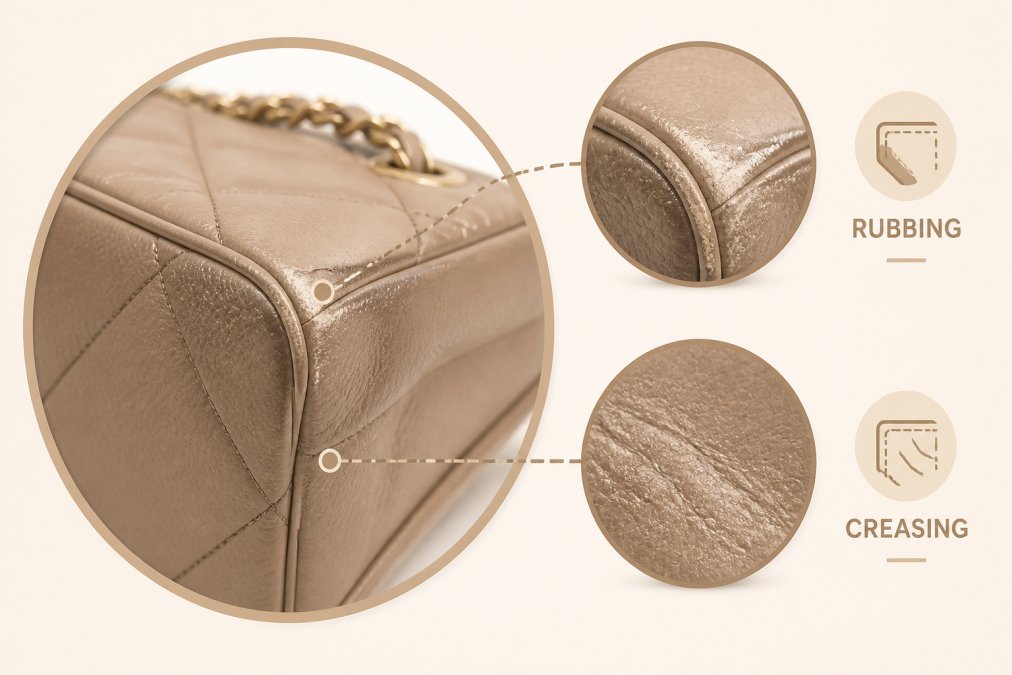
Corner rubbing is perhaps the most visible wear indicator on leather handbags. Leather gradually loses its protective finish in these areas, revealing lighter leather underneath. This wear is inevitable on any regularly-used handbag and reflects actual use rather than poor care.
Hardware scratching develops as metal components contact other surfaces. Gold-toned hardware develops subtle patina, while silver-toned hardware shows more visible scratching. Fine scratches are normal on excellent and very good condition pieces, while significant gouges indicate heavy wear.
Patina on leather represents natural darkening and character development over time. High-quality leather becomes richer and more beautiful with age and use, particularly visible on lighter-colored leathers and considered desirable by many collectors.
Creasing occurs when leather folds repeatedly in the same areas, particularly along the sides and bottom of structured handbags. Light creasing is normal on very good and good condition pieces, while severe creasing suggests improper storage or heavy use.
Interior wear includes pen marks, staining, and lining damage. The interior lining often wears faster than exterior leather due to constant contact from keys and makeup. Lining tears or staining lower condition grades but do not affect external appearance or functionality.
Staining and discoloration vary by material and cause. Water marks, makeup stains, or dye transfer can affect both leather and canvas. Some stains are removable through professional cleaning; others are permanent. Location and extent of staining influence condition grading significantly.

How to Inspect Pre-Owned Designer Bags
Systematic inspection prevents disappointment and ensures accurate condition evaluation. Whether purchasing or consigning, following a structured inspection process identifies condition accurately.
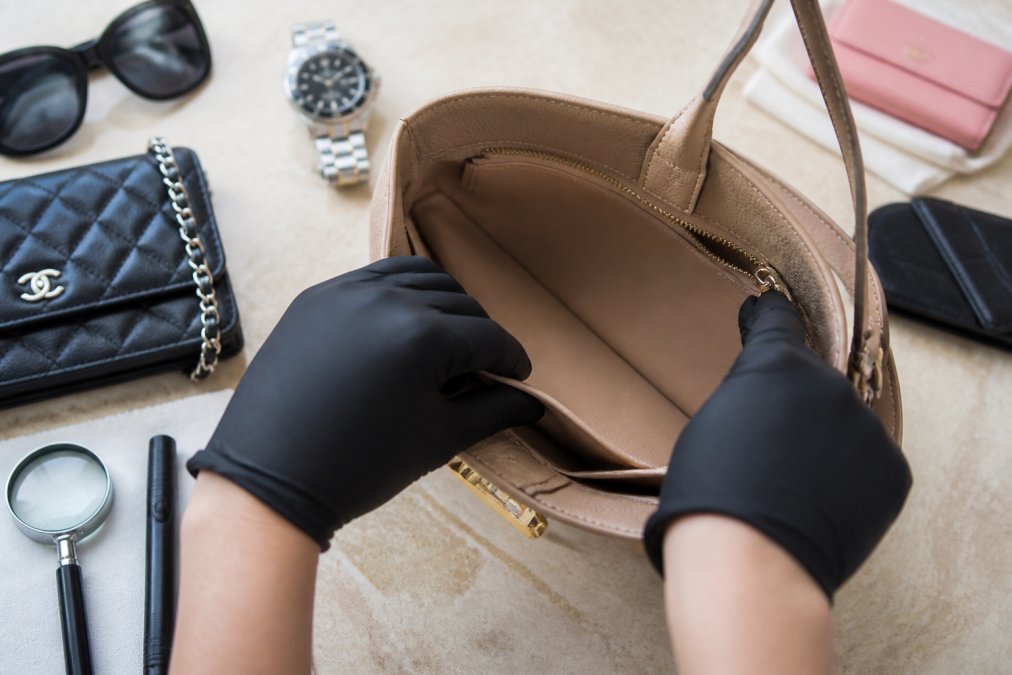
Begin with exterior assessment in natural lighting. Examine the entire surface under natural daylight or bright indoor lighting. Look for color consistency, patina development, and visible damage. Check all corners and edges where wear concentrates. Document any scratches, creasing, or staining with close-up photographs from multiple angles.
Evaluate the hardware systematically. Inspect all metal components, clasps, D-rings, feet, and decorative elements. Check for scratching, tarnishing, and proper function. Verify that all hardware is original to the piece.
Assess the leather or material integrity. Feel the leather's texture and suppleness. High-quality leather should feel soft and flexible. Check for cracks, peeling, or material degradation. On canvas pieces, examine for color fading or fraying.
Examine the interior thoroughly. Open all pockets and compartments. Look for staining, pen marks, or lining damage. Check that zippers function smoothly. Verify that interior serial numbers or authenticity markers are present and legible.
Check structural integrity. Gently flex the bag to ensure it maintains its shape. Look for any separation of seams at stress points. Verify that the base is stable and not warped.
Document findings in writing. Create a detailed condition report noting specific wear, damage, and positive attributes. This documentation protects both buyer and seller by creating a record of the bag's condition at the time of transaction.
How Condition Impacts Resale Value
Condition grade directly determines secondary market pricing, but the relationship is not linear. The same condition grade applied to different models, colors, and eras produces dramatically different valuations.
Pristine and mint condition pieces typically command 70-85% of original retail value, assuming the model remains desirable and the color is neutral or classic. Excellent condition bags generally retain 60-75% of original retail value. Very good condition pieces typically command 50-65% of original retail value. Good condition handbags usually sell for 35-50%, while fair condition pieces may fetch 20-35%.
Beyond condition grade, several factors influence resale value independently. Model desirability matters enormously; classic, timeless designs hold value better than trend-dependent styles. Color significantly impacts value. Neutral colors, black, brown, tan, navy, maintain consistent demand and hold value well across all condition grades. Seasonal colors and bold hues are harder to resell and experience steeper depreciation.
Material type influences both wear visibility and value retention. Leather ages beautifully and develops desirable patina, while canvas materials may show wear less gracefully. Exotic leathers command premium prices and maintain value better than standard leather or canvas, even with visible wear.
Authenticity and provenance affect value across all condition grades. Pieces with original receipts, complete documentation, and verified authenticity command premiums. Bags with uncertain origin sell at significant discounts regardless of physical condition.
Market demand fluctuates based on fashion trends, celebrity endorsements, and broader economic conditions. A handbag model experiencing renewed popularity may appreciate slightly in secondary market value, while outdated styles depreciate further. Condition grade remains important, but market momentum influences pricing significantly.
Understanding these variables helps buyers and sellers set realistic expectations. A very good condition handbag in a seasonal color might retain less value than an excellent condition piece in classic black, despite the condition grade difference.
The Role of Original Packaging and Authenticity Documentation
Original packaging and documentation serve multiple purposes in luxury resale. They provide authenticity verification, protect the piece's condition, and significantly influence buyer confidence and pricing.
Original boxes and dustbags signal that the piece was genuinely purchased from an authorized retailer and cared for properly. From a practical standpoint, original packaging protects the handbag during storage and transportation. Pieces stored in original packaging often show less environmental wear than those stored loosely.
Authenticity documentation includes receipts, serial number cards, certificates, and brand-specific markers. A copy of the original receipt proves the item was purchased from an authorized source and establishes approximate purchase date. Serial number cards or date codes verify that the piece is genuine and sometimes indicate production year.
Missing or incomplete documentation lowers condition grades and reduces resale value. A pristine condition handbag without original box or receipt typically drops to excellent condition pricing because documentation absence creates authentication uncertainty.
Steyn Atelier emphasizes documentation and packaging in its curation process. For buyers, the presence of original packaging and documentation justifies paying premium prices for pre-owned pieces.
Understanding luxury resale condition grading transforms how collectors buy, sell, and value designer handbags. The absence of industry-wide standardization means that buyers and sellers must develop independent assessment skills rather than relying entirely on platform labels. By learning to identify specific wear patterns, understanding how condition grades translate across platforms, and recognizing which factors truly impact value, collectors make more informed decisions in the secondary market.
Steyn Atelier brings expertise and authentication rigor to this process, curating pre-owned and new luxury pieces with transparency about condition, provenance, and value drivers. For collectors seeking authentic designer handbags with confidence in their quality and heritage, exploring Steyn Atelier's curated collection of luxury handbags provides access to expertly assessed pieces backed by 100% authenticity guarantee. Whether seeking pristine statement pieces or excellent condition everyday luxury, Steyn Atelier's selection reflects the deep understanding of condition, value, and craftsmanship that discerning collectors expect.
Frequently Asked Questions
What is the difference between pristine and excellent condition in luxury resale?
Pristine and mint condition describe handbags that are essentially unworn, often with original packaging and tags intact. Excellent condition items show minimal to no visible signs of use, though they may lack original packaging. Both represent giftable pieces, but pristine commands higher resale value due to the complete provenance and unused status.
How do common signs of wear on luxury handbags affect resale value?
Visible wear such as corner rubbing, hardware scratching, patina, creasing, or staining directly impacts resale value and condition rating. Minor wear on a pre-loved handbag is expected and acceptable in excellent or very good grades, but significant damage reduces both appeal and market demand. Condition assessment considers the severity and location of wear.
Why do condition grading standards vary between luxury resale platforms?
Each resale provider develops proprietary grading methodologies based on their inspection criteria and target market. This inconsistency creates confusion for buyers. Some platforms prioritize structural integrity and material condition, while others emphasize visual appearance. Understanding a specific platform's grading scale before purchasing ensures you receive what you expect.
What should I look for when inspecting a pre-owned designer bag before purchase?
Inspect the leather for discoloration, creasing, and staining. Check hardware for scratching and functionality. Examine the interior lining for tears or stains. Verify stitching integrity and corner rubbing severity. Request detailed photos of any wear areas. Original packaging and authenticity documentation add confidence in your purchase and support future resale value.
Does very good condition mean there are visible flaws on a luxury handbag?
Yes. Very good condition indicates the handbag shows visible signs of use but maintains structural integrity and material quality. Expect minor wear such as light scratches, faint creasing, or subtle discoloration. These pieces remain functional and attractive but are not suitable for gifting unopened. They represent well-loved items with character and history.
How does original packaging impact the resale value of luxury handbags?
Original packaging, including the box, dustbag, and authenticity cards, significantly increases resale value and buyer confidence. Items with full original sets command premium pricing in the secondary market. Even without original packaging, pristine or excellent condition items retain strong value, but the complete provenance documentation supports both authenticity verification and buyer perception of item quality.