


Buy Authenticated Vintage Designer Clothing: 2026 Guide
Table of Contents
- Why Authenticated Vintage Designer Clothing Demands a Different Approach
- Quick Comparison: Where to Buy Authenticated Vintage Designer Clothing
- 1. Steyn Atelier: Curated Pre-Owned Luxury with 100% Authenticity Guaranteed
- 2. Specialist Vintage Couture Dealers
- 3. Authenticated Peer-to-Peer Luxury Marketplaces
- 4. Independent Third-Party Authentication Services
- Understanding the Luxury Resale Authentication Process
- How to Spot Fake Vintage Designer Clothes Before You Buy
Last Updated: August 10, 2026
The luxury resale market has matured significantly, and the question buyers ask most often is no longer "where do I find vintage designer clothing?" but "how do I know it's real?" This guide from Steyn Atelier breaks down exactly where to shop, what authentication actually involves, and how to protect yourself before spending serious money on pre-owned designer fashion.

The market for pre-owned designer fashion has grown steadily, driven by collectors seeking rare finds and discerning buyers who understand that certain heritage garments hold their character in ways no new production run can replicate. The same desirability that makes vintage designer clothing worth pursuing also makes it a target for counterfeits. Buyer protection, condition grading, and provenance documentation have never mattered more.
Why Authenticated Vintage Designer Clothing Demands a Different Approach
Authenticated vintage designer clothing is pre-owned or archival designer apparel verified as genuine by qualified experts using physical inspection, provenance research, and specialized tools. The "authenticated" designation is not cosmetic, it is the difference between a collectible fashion piece and a worthless replica.
Buying secondhand luxury clothing differs fundamentally from buying new. A new piece from a boutique carries a chain of custody tracing directly to the manufacturer. Pre-owned and vintage pieces do not. Provenance documents may be missing, labels may have aged, and condition varies enormously. The counterfeit prevention challenge is also more acute in vintage apparel: counterfeiters have had decades to study older hardware, labels, and stitching patterns.
Buying pre-loved designer clothing extends the life of garments that required significant resources to produce. That value is only realized when the item is genuinely what it claims to be. The practical implication: buyers must either trust a platform's authentication infrastructure completely, or develop enough literacy to verify independently.
Quick Comparison: Where to Buy Authenticated Vintage Designer Clothing
| Source | Authentication Type | Best For | Condition Reports |
|---|---|---|---|
| Steyn Atelier | In-house expert curation, 100% authenticity guaranteed | Curated pre-owned luxury handbags and accessories | Yes |
| Specialist vintage couture dealers | In-house, Letter of Authenticity | Rare vintage and couture apparel | Yes |
| Authenticated peer-to-peer marketplaces | Physical inspection before shipment | Wide range, varied price points | Varies by platform |
| Independent third-party authentication services | Expert review, digital certification | Buyer-initiated verification | Yes, with certificate |
1. Steyn Atelier: Curated Pre-Owned Luxury with 100% Authenticity Guaranteed
For buyers who want expert curation rather than marketplace browsing, Shop Authentic Luxury at Steyn Atelier is the strongest starting point. Every piece carries a 100% authenticity guarantee, backed by expertise shaped by years of experience in Paris and Europe, a meaningful credential in a category where provenance and leather craftsmanship knowledge matter.

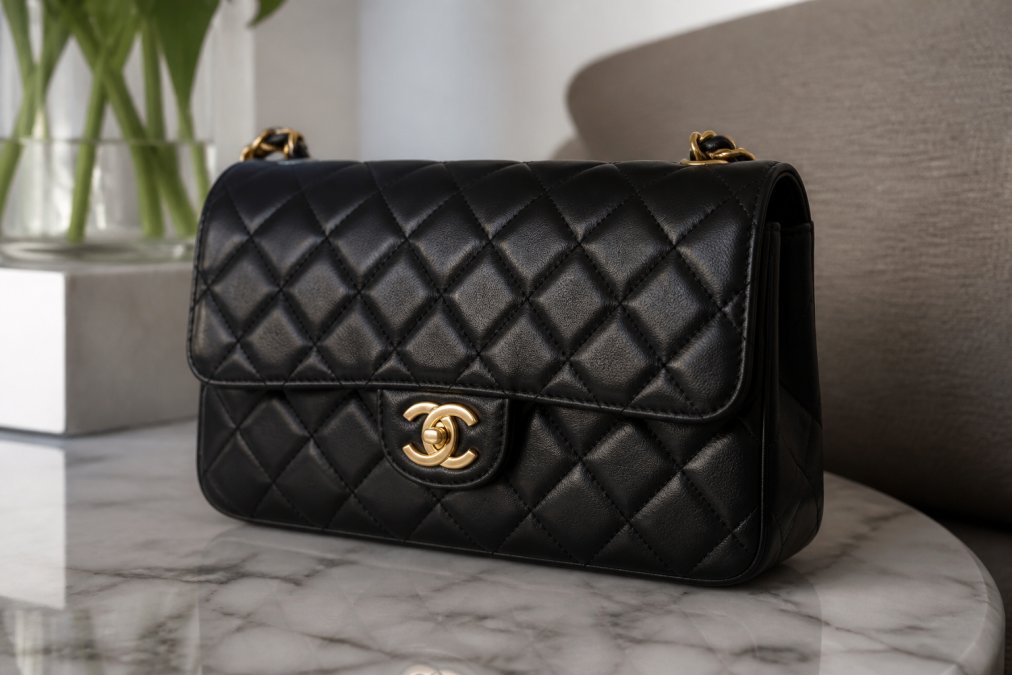
The collection reflects a deliberately curated edit rather than a high-volume marketplace. When a platform carries items that have been personally selected, the authentication standard is applied consistently rather than algorithmically. Buyers are not navigating thousands of listings and hoping the authentication flag is accurate.
Steyn Atelier's positioning suits buyers who want confidence without the research burden: the curation, authentication, and quality assurance have already been done. The New Arrivals section offers a regularly updated selection of authenticated pieces, allowing buyers to discover newly acquired inventory without the overhead of continuous browsing.
2. Specialist Vintage Couture Dealers
Specialist vintage couture dealers depend entirely on authentication credibility. Their buying teams typically travel internationally to hand-select vintage luxury items, and authentication is performed at sourcing and again before sale.
The standard documentation from a reputable specialist dealer includes a Letter of Authenticity for each item sold. This is not an automatically generated certificate but a document prepared by in-house authenticators who have examined the piece and can speak to its provenance.
Specialist dealers offer depth of contextual knowledge that larger marketplaces cannot. A dealer who has spent years studying a specific era of Chanel ready-to-wear will recognize period-correct construction details that a generalist authentication system might not flag. This expertise is particularly valuable for pre-1990s couture, where reference databases are thinner and construction methods varied significantly by season and atelier.
For collectors pursuing rare finds in vintage designer apparel, archival runway pieces, or couture from specific creative directors, specialist dealers are often the only reliable source.
The Council of Fashion Designers of America's resources on fashion provenance and archival standards
3. Authenticated Peer-to-Peer Luxury Marketplaces
Peer-to-peer luxury marketplaces have invested heavily in authentication infrastructure, with better platforms now offering physical inspection before items ship to buyers. Some route every eligible item through an authentication facility; others offer it as an opt-in service for higher-value purchases.
The authentication process typically involves checking logos, tags, materials, hardware, and construction quality against known authentic examples. For eligible apparel items from select brands above a price threshold, some platforms provide a unique authentication card with each verified purchase and a detailed report documenting the inspection.
The key variable is price threshold. Most peer-to-peer platforms only apply physical authentication to items above a certain value. Below that threshold, buyer protection policies vary, and buyers are often relying on seller-provided photographs and descriptions.
4. Independent Third-Party Authentication Services
Independent authentication services verify items that buyers already own or are considering purchasing from any source. These services do not sell items; they provide expert appraisal and official documentation.
A buyer submits detailed photographs through a digital platform and receives a determination, typically within 12 to 24 hours. If the item passes, the service issues electronic certification that can be used as documentation for resale or insurance purposes.
Independent authentication is most valuable when a buyer is purchasing from a private seller or a platform without built-in authentication, or when a buyer wants a second opinion on an item they already own before consigning or reselling it. According to the Federal Trade Commission's guidance on counterfeit goods, buyers who can document that they took reasonable steps to verify authenticity are in a stronger position when disputing fraudulent sales.
Understanding the Luxury Resale Authentication Process
The luxury resale authentication process is a structured evaluation using physical inspection, provenance research, and specialized tools to determine whether a pre-owned item is genuine.
Physical Inspection Checkpoints
Physical inspection is the foundation of any credible authentication. Experts examine checkpoints that vary by brand and item type, but generally include:
- Stitching consistency: Authentic luxury garments use precise, even stitching with specific thread counts per centimeter. Irregularities are a primary counterfeit indicator.
- Label construction and placement: Labels in authentic vintage pieces use period-correct fonts, materials, and placement. Label aging should be consistent with the garment's overall condition.
- Hardware quality and markings: Authentic hardware is typically heavier, more precisely finished, and carries specific engravings or stampings. Counterfeit hardware often shows casting seams or incorrect font weights.
- Material quality and aging: Genuine leather ages in characteristic ways depending on type. Lambskin, calfskin, Epi leather, and Clemence each have distinct aging signatures.
- Interior construction: Lining materials, interior pocket placement, and serial number formats are brand-specific and era-specific.
Authentication Verification Tools Used by Experts
Professional authenticators use specialized tools to verify pre-owned designer items. According to Smithsonian Institution research on material authentication methods, material analysis techniques originally developed for museum conservation have found practical application in luxury goods authentication.
Key tools include:
- Magnifying glasses and loupe lenses: Used to examine stitching, hardware engravings, and label printing at close range. Counterfeit labels often show pixelation under magnification that is invisible to the naked eye.
- UV lamps: Certain materials and inks fluoresce differently under ultraviolet light. Authentic items use materials with consistent UV responses; counterfeit materials often show anomalies.
- Diamond testers and metal analyzers: Used to verify hardware composition. Authentic luxury hardware uses specific alloys; counterfeit hardware often substitutes cheaper metals.
- Proprietary reference databases: Established authentication services maintain databases of authentic examples across brands, eras, and production runs, allowing authenticators to cross-reference specific details.
How to Spot Fake Vintage Designer Clothes Before You Buy
Spotting counterfeit vintage designer clothing requires a systematic approach. Most fakes are detectable by buyers who know what to look for.
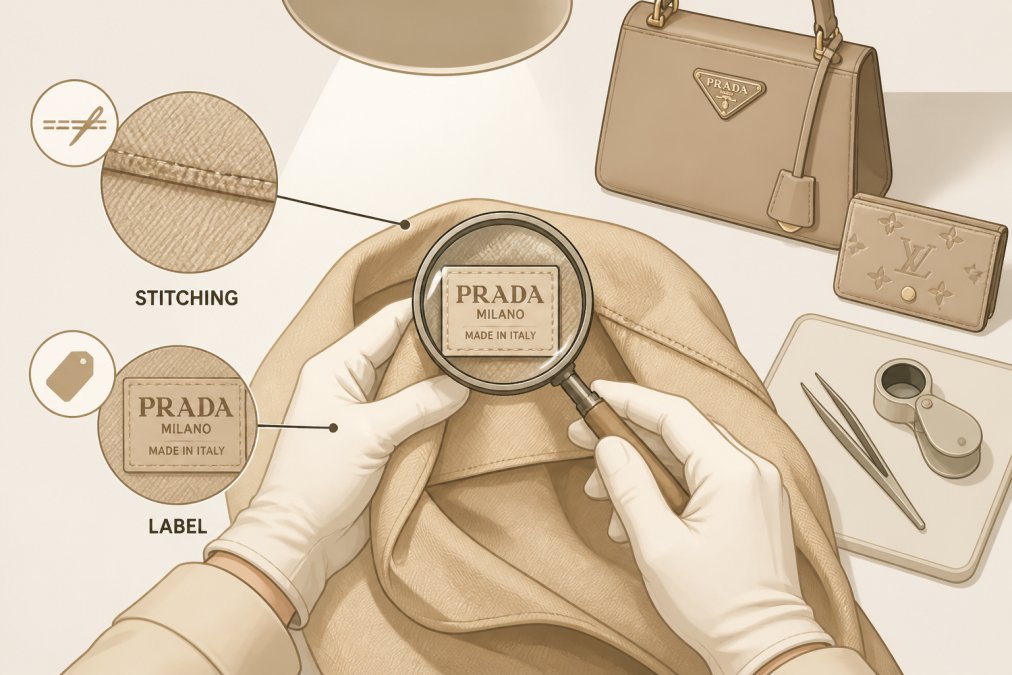
The most common mistake buyers make is evaluating an item holistically rather than methodically. A convincing fake often gets one or two details exactly right while failing on others. Checking each element independently is more reliable.
Red Flags in Stitching, Labels, and Hardware
Stitching is the most consistent tell. Authentic luxury garments use tight, even stitching with consistent tension throughout. Loose threads, uneven spacing, or thread color that does not match the garment's interior lining are all red flags.
Labels require attention to both content and construction. Period-correct labels use specific fonts, thread colors, and attachment methods. A label that has been re-sewn, detectable by mismatched thread holes or slight misalignment, is a serious warning sign. Counterfeiters sometimes harvest authentic labels from damaged garments and attach them to fakes.
Hardware on bags and accessories should feel substantial. Authentic hardware has weight and precision that budget counterfeit production cannot match economically. Check engravings under good light: authentic engravings are crisp and consistent in depth. Counterfeit engravings often show variation in depth or slight blurring at the edges.
A useful checklist for pre-purchase evaluation:
- Request photographs of stitching at 1:1 resolution, not compressed thumbnails
- Ask for close-up images of all labels, including care labels and country-of-origin labels
- Request photographs of hardware engravings under direct light
- Ask for interior photographs showing lining, pockets, and serial numbers
- Verify that the aging on all components is consistent
- Cross-reference serial number formats against known authentic examples for the brand and era
Provenance Documents and What They Should Include
Provenance documentation is the paper trail that supports an item's authenticity claim. For vintage designer clothing and accessories, complete provenance typically includes some combination of the following:
- Original purchase receipt or boutique documentation: Not always available for vintage pieces, but when present, it is the strongest possible provenance evidence.
- Letter of Authenticity from a recognized expert or dealer: Should identify the authenticator by name and credential, describe the item specifically, and state the basis for the authentication determination.
- Authentication certificate from a third-party service: Should include the service's name, item description, authentication method used, and a unique certificate number that can be verified.
- Previous ownership documentation: Customs declarations, insurance appraisals, or consignment records from reputable dealers all contribute to provenance.
According to the U.S. Customs and Border Protection guidance on counterfeit goods identification, buyers who can demonstrate documented provenance are better protected in disputes.
What provenance documents should not include: vague statements of authenticity without specific examination details, certificates from services with no verifiable track record, or documentation that does not match the item's described condition or history. If a seller cannot provide any provenance documentation for a high-value vintage piece, that absence is itself informative.
The pre-owned designer fashion market rewards buyers who understand what they are buying and why authentication standards exist. For collectors and discerning buyers who want that confidence built in from the start, Steyn Atelier's curated collection of authenticated Designer Handbags and Designer Wallets & Accessories, each selected for quality, heritage, and verified provenance, offers a direct path to pre-loved designer pieces without the research burden. Browse the latest arrivals at Steyn Atelier and find authenticated luxury that stands behind every piece it carries.
Frequently Asked Questions
How can you tell if vintage designer clothing is authentic?
Authentic vintage designer clothing carries consistent stitching, correctly spelled and era-appropriate labels, matching serial numbers (where applicable), and hardware that feels substantial rather than lightweight. Provenance documents such as original receipts, authentication certificates, or letters of authenticity add further confidence. For high-value pieces, submitting detailed photographs to a third-party authentication service or buying from a curated platform like Steyn Atelier, which guarantees 100% authenticity on every purchase, removes most of the guesswork.
Is it safe to buy vintage designer items online?
Buying pre-owned designer fashion online is safe when you choose sources that apply a rigorous luxury resale authentication process before listing items. Look for platforms that provide condition reports, clear return policies, and buyer protection. Curated destinations with in-house expert appraisal or third-party authentication certificates carry significantly lower counterfeit risk than unvetted peer-to-peer listings. Always confirm what documentation accompanies the piece and whether the seller offers recourse if authenticity is disputed after delivery.
What should I look for when buying pre-owned luxury fashion?
Start with the condition grade: terms like Pristine, Excellent, Very Good, and Good each describe a specific level of wear, and reputable sellers define them clearly in a condition report. Confirm that authentication has been performed, ideally with supporting documentation. Check that provenance details are disclosed, including original ownership history where known. Review the return and dispute policy before purchasing. For designer handbags and accessories, Steyn Atelier's curated collection includes detailed item information to help buyers make confident decisions.
Which vintage designer clothes tend to hold their value over time?
Historically, pieces from heritage houses such as Chanel, Hermès, Louis Vuitton, and Dior have shown strong secondary-market demand, though resale performance varies by model, colorway, condition, age, and broader market trends. Rare or limited-edition ready-to-wear and accessories in excellent condition with original provenance documents generally attract the most collector interest. No pre-owned item carries a guaranteed future value; market behavior should be treated as historical context rather than a forecast.
What does a luxury resale authentication process typically involve?
A thorough luxury resale authentication process examines construction details including stitching consistency, hardware weight and finish, label font and placement, date codes or serial numbers, and material quality. Experts often use tools such as UV lamps, magnifying loupes, and material-testing equipment. Leading services also cross-reference items against proprietary databases of known counterfeits. The outcome is typically documented in a condition report or authentication certificate that accompanies the piece at the point of sale.